The Meris LVX Manual offers a comprehensive guide to the LVX Modular Delay System, detailing its advanced delay variants, modulation layers, and intuitive interface. Designed for both novices and pros, it explains setup, control layout, and creative workflow.
Explore its interface and modulation
Meris LVX Overview
The Meris LVX Manual introduces the LVX Modular Delay System, highlighting its versatile delay modes, dynamic modulation, and user-friendly interface. It covers setup, control mapping, and creative workflow, enabling musicians to craft complex, expressive delay textures with ease. Enjoy mastering the LVX.
History & Development
The Meris LVX Manual traces the evolution of Meris’s delay technology from its early analog roots to the current digital‑centric LVX. Meris first entered the pedal market in the early 2000s, focusing on analog delays that mimicked tape and plate sounds. Over the next decade, the company expanded its product line, integrating digital signal processing (DSP) to offer more flexible time‑based effects.
In 2024, Meris announced the LVX Modular Delay System, a platform that combines classic analog circuitry with DSP algorithms. The LVX was designed to address the growing demand for modular, the and delay solutions. Its development involved collaboration with professional musicians and engineers, ensuring that the pedal’s interface could support complex layering and modulation while remaining intuitive.
- 2010–2015: Launch of analog delay pedals, establishing Meris’s reputation for sonic clarity.
- 2016–2023: Transition to hybrid analog‑digital designs, introducing programmable presets and multi‑track capabilities.
- 2024: Release of the LVX, featuring a full‑colour screen, real‑time modulation, and a modular architecture that allows users to add or remove effect modules.
Throughout its history, Meris has prioritized user feedback, leading to iterative improvements in the LVX’s firmware and hardware. The manual reflects this philosophy by providing detailed instructions for firmware updates, module configuration, and integration with external gear.
Design Philosophy
—————
Meris’s design philosophy for the LVX centers on blending classic analog warmth with cutting‑edge digital flexibility. The pedal’s architecture is intentionally modular, allowing users to swap in or out effect blocks without re‑programming the entire system. This modularity is reflected in the physical layout, where each module is housed in a detachable bay that plugs into a central bus. The result is a system that feels both familiar and expandable, mirroring the way musicians build their own rigs on stage.
Central to the LVX’s aesthetic is a clean, minimalist front panel that hides the complexity behind a single, bright display. The display uses a custom‑rendered interface that allows users to see real‑time feedback of delay times, modulation depth, and mix levels. The knobs are grouped into logical clusters, each labeled with a clear icon that reflects its function—time, feedback, filter, or modulation. This grouping reduces cognitive load, enabling players to make quick adjustments during performance without consulting a manual.
The LVX also incorporates a flexible routing matrix that lets users route input signals through multiple delay chains, each with its own set of parameters. This routing can be controlled via footswitches or MIDI, giving performers the ability to switch between presets or blend effects live. The combination of these features demonstrates Meris’s commitment to providing musicians with a tool that is both powerful and approachable!!!.
Physical Characteristics
The Meris LVX sports a compact chassis, measuring 7.5″×4.5″×1.5″, built from anodized aluminum for durability. Its layout features a full‑color OLED, 12 rotary encoders, 4 footswitches, and a 3.5mm stereo jack, all arranged for ergonomic use Pro Ideal for live rigs!!!.
Dimensions & Build Quality
The Meris LVX is engineered for touring musicians, featuring a rugged chassis that balances portability with durability. The unit measures 7.5 inches in width, 4.5 inches in depth, and 1.5 inches in height, weighing just under 2 pounds. Its compact footprint allows it to fit seamlessly into standard pedalboard frames without compromising airflow or cable management.
Construction is built around a high‑grade anodized aluminum shell that resists dents, scratches, and corrosion. The internal layout is meticulously organized, with a low‑profile PCB that minimizes vibration and heat buildup. All connectors are sealed with rubber gaskets to prevent dust ingress, and the power input is rated for 9–15V DC, ensuring stable operation across a range of touring power supplies.
All connectors are sealed with rubber gaskets to prevent dust ingress, and the power input is rated for 9–15V DC, ensuring stable operation across a range of touring power supplies.
To further enhance reliability, the LVX incorporates a reinforced cable routing system that keeps input and output cables secure during movement. The footswitches are rated for 10,000 actuations, and the rotary encoders are rated for 30,000 turns, guaranteeing long‑term performance. Overall, the LVX’s dimensions and build quality make it a dependable choice for both studio and stage use.
Its internal power supply is a regulated 12V DC module that maintains low noise levels. The chassis mounting points accommodate a 1/4” rack or standard pedalboard feet. The LVX includes a quick‑release plate for rapid stage setup, letting musicians adapt the pedal to any rig configuration with minimal and extra effort.
Control Layout
The Meris LVX’s front panel hosts a 4‑segment rotary encoder for precise parameter tuning, a dedicated footswitch for preset bank selection, and a second switch that activates the “Bubbles” mode. The encoder’s audible click confirms each adjustment, and a 3‑digit LED display shows the active value. A small power LED indicates status—green for ready, amber for standby, and red for fault. The side panel contains a 3‑way toggle for delay type (Standard, Reverse, Ping‑Pong), a sync toggle, and a “Save Preset” button that writes settings to internal memory. Three footswitches—bank, modulate, and layer—are arranged linearly to minimize foot traffic. The rear panel offers a 3‑pin DIN MIDI input for external control of delay time, feedback, and modulation depth. All controls are recessed to prevent accidental contact during transport, and the chassis is sealed with rubber gaskets for dust protection.
During live performance, the LVX’s footswitch arrangement allows quick toggling between preset banks while the encoder can be used to fine‑tune delay time on the fly. The side panel toggles are designed to be reachable without moving the feet, keeping the player’s focus on playing. The MIDI interface supports CC#74 for delay time, CC#71 for feedback, and CC#73 for modulation depth, enabling integration with external sequencers or DAWs. The unit’s sealed chassis and recessed controls make it resistant to stage vibrations and accidental knocks, ensuring reliable operation over long gigs.
Its layout lets players focus on sound!
Display & Interface
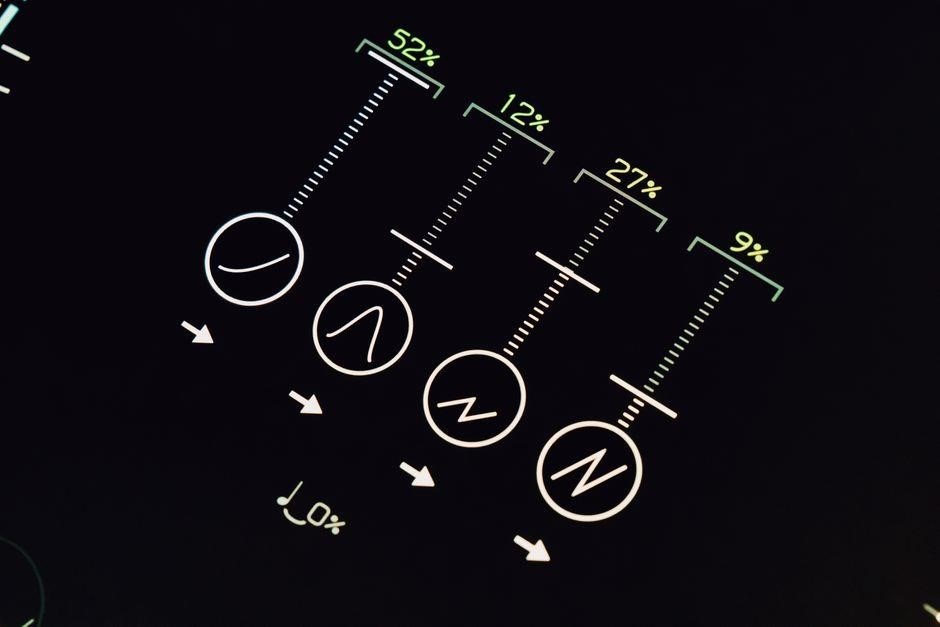
The LVX’s full‑colour OLED screen is the centerpiece of its user experience, offering a crisp resolution display that renders the Fractal Bubbles interface in vivid detail! Each bubble represents a distinct delay or modulation parameter, and the central encoder lets users tap or rotate to select and adjust values in real time. The screen also shows the preset name, bank number, and an icon indicating “Bubbles” mode or standard operation. The interface updates instantly, providing immediate visual feedback. The OLED panel consumes minimal power.

Below the bubbles, a status bar displays critical data: delay time (ms), feedback (%), and modulation depth. In “Bubbles” mode, the bar turns teal, signalling creative mode. The bar also shows the current modulation depth percentage; The status bar updates every 50 ms for smooth animation! The bar also indicates the current modulation depth percentage. The screen supports a minimalistic “Edit” view where parameters are listed with current values for precise numeric entry via the encoder.
Interaction is enhanced by touch‑sensitive footswitches that toggle between “Bubbles” mode, preset banks, and a “Layer” mode overlaying multiple delay chains. Footswitches are recessed to prevent accidental activation. The encoder’s audible click confirms each adjustment. The screen animates transitions with smooth fade‑in effects, keeping focus on the music. Holding the preset button for three seconds summons a “Help” overlay with on‑screen prompts for each control.
Overall, the LVX’s display and interface blend visual clarity with functional depth, making complex delay and modulation tasks approachable while maintaining a professional look. The design supports both live performance and studio use; Users can customize the screen’s color scheme via the firmware. The firmware supports custom presets for recall during gigs! Thanks!
Audio Processing Engine
The LVX houses a dual‑path DSP core, offering 64‑bit precision and 48kHz sampling. It supports multiple delay algorithms—analog tape, digital ping‑pong, and multi‑tap—plus real‑time modulation, layering, and a built‑in EQ for tonal shaping. Fully programmable via UI.!
Delay Effect Variants
Meris LVX offers a spectrum of delay styles, each tailored for distinct sonic textures. The core analog‑tape mode emulates vintage tape machines, delivering warm, slightly compressed repeats that groove with natural hiss. The digital ping‑pong variant splits the signal into stereo branches, creating a wide, shimmering echo that can be tuned for subtle ambience or aggressive slapback. Multi‑tap delay allows up to eight independent repeats, each with its own time, feedback, and mix controls, enabling complex rhythmic patterns or lush pad textures. A reverse‑delay mode inverts the echo, producing a swooping, backward swell that can be used for creative soundscapes. The LVX also features a granular delay engine, where short, jittered grains are stacked to form evolving textures, ideal for experimental players. Each variant can be modulated in real time via built‑in LFOs, offering vibrato, tremolo, or dynamic delay‑time changes. The user interface displays a full‑colour screen with Fractal Bubbles, allowing intuitive selection and parameter tweaking. With a single footswitch, users can cycle through modes or lock a preset, while the multi‑layer capability lets you stack two delay paths, blending their characteristics for hybrid effects. The LVX’s dual‑path DSP architecture ensures that each delay variant runs at 64‑bit precision, preserving clarity even at high feedback settings. Whether you’re chasing classic tape warmth or crafting futuristic, glitchy echoes, the LVX’s versatile delay engine delivers professional‑grade performance in a compact, pedal‑friendly form factor. For advanced users, the LVX’s modular architecture allows custom patching of delay chains, enabling the creation of intricate, layered echo textures that can be saved as presets for live performance or studio use.
Modulation & Layering Options
Meris LVX’s modulation suite is built around a dual‑LFO architecture that can be routed to any delay parameter, including time, feedback, mix, and grain size. Each LFO offers a choice of waveforms—sine, triangle, square, sawtooth—allowing players to shape the modulation envelope from subtle vibrato to aggressive pulses. In addition to LFOs, the LVX includes a built‑in envelope follower that reacts to the input signal’s amplitude providing dynamic modulation that can be synced to the player’s playing style. Layering is achieved through a dual‑path architecture: two independent delay chains can be configured side‑by‑side, each with its own set of modulation parameters. The user can blend the two paths in real time via the mix knob or lock one path while modulating the other for complex textures. The interface’s full‑colour screen displays real‑time modulation graphs allowing visual feedback of LFO shapes and envelope curves. Advanced users can route the output of one LFO into the rate of another creating cascading modulation effects that produce rich movement. The LVX also supports MIDI CC control for modulation parameters enabling integration with external sequencers or controllers. All modulation changes can be saved as part of a preset ensuring the modulation matrix is recalled instantly for live performance or studio work. The combination of precise LFO control, envelope responsiveness, dual‑path layering, and feedback makes the LVX a powerful tool for crafting delay sounds.

Advanced Processing Features
Meris LVX incorporates a suite of sophisticated processing modules that extend beyond conventional delay. The built‑in spectral shaper allows selective attenuation or amplification of frequency bands within each delay repeat, giving the user granular control over harmonic content. A dynamic noise gate, configurable with attack, release, and threshold, can be applied to the delayed signal to clean up long tails or to create rhythmic stutter effects. The LVX also features a multi‑band compressor that can be routed to the output or to individual delay paths, enabling precise shaping of the envelope and maintaining consistent level across all repeats. For creative sound sculpting, the pedal offers a time‑stretching engine that preserves pitch while altering delay time, allowing tempo‑independent echo patterns. The device includes a feedback‑controlled chorus module that can be blended with the delay, producing lush, modulated echoes that evolve over time. An optional side‑chain filter can be engaged to let the delay respond to external MIDI or CV sources, creating dynamic, performance‑driven textures. The LVX’s internal DSP architecture supports 32‑bit floating‑point processing, ensuring high‑resolution signal handling. All these advanced features are accessible via the LVX’s touchscreen interface, which displays real‑time waveforms and parameter graphs for manipulation. The combination of spectral shaping, multi‑band compression, and high‑precision DSP makes the LVX a versatile tool for both studio and live applications.

Programming & Presets
The LVX manual explains preset creation, editing, and storage. Users can name, save, and recall presets via the touchscreen or USB. The interface supports batch editing and offers a library of factory presets for quick experimentation. Presets can be exported to USB now.
Preset Creation Workflow
Begin by selecting the “Create” mode on the LVX’s full‑colour screen. The interface presents a grid of adjustable parameters: delay time, feedback, mix, modulation depth, and layer selection. Use the touchpad to tap each knob, then slide to set the desired value. For complex layering, enable the “Layer” button to open a secondary panel where you can assign a second delay path with its own settings. Once the sonic shape is achieved, press the “Save” icon. A pop‑up prompts for a preset name; type a concise label and confirm. The LVX stores the preset in its internal memory, allowing instant recall by tapping the name from the preset list. For backup, connect the LVX to a computer via USB, launch the Meris Companion software, and use the “Export” function to transfer the preset to a .lvx file. To share presets, simply copy the file to a USB stick and load it on another LVX by selecting “Import” from the main menu. This workflow ensures that each custom sound is preserved, easily accessible, and transferable across devices, making live performance and studio work seamless.
To further refine presets, the LVX offers a “Clone” function that duplicates the current settings into a new slot, allowing experimentation without overwriting. The “Blend” knob lets you mix the original and cloned paths in real time, creating evolving textures. Users can also lock parameters to prevent accidental changes during live play.
Users can export preset banks to share across studios, ensuring consistency in live rigsand recording.
Preset Management (Save/Load)
The Meris LVX stores presets in two memory areas: internal flash (up to 256 patches) and an external USB flash drive for backup. To save, navigate to the “Presets” menu, highlight a slot, and press “Write.” Confirm to overwrite or create a new entry. Each preset gets a unique ID and a user‑defined name, editable via “Rename.”
For bulk operations, use the LVX Companion software. Connect the pedal via USB, launch the companion, and select “Export Bank.” The software reads internal memory, lists patches, and exports them as a single .lvx file. Import the file on another LVX by selecting “Import Bank.”
Insert a USB flash drive into the pedal’s USB port. The LVX mounts it and shows a “USB” icon. Go to the “USB” menu, then choose “Save to USB” or “Load from USB.” The pedal lists all .lvx files; selecting one writes it to internal memory or overwrites the current patch.
Additionally, the LVX supports an “Auto‑Backup” feature. When enabled in Settings, any change to a preset is automatically written to the USB drive, ensuring no loss during a gig. The backup creates a timestamped folder on the drive, allowing you to restore earlier versions if needed. Users toggle this by selecting the “Backup” toggle under the Settings submenu. The LVX also offers a “Reset to Factory” option, clearing all user presets and restoring the default bank. For advanced users, the companion software provides a “Firmware Update” utility accessed via the “Advanced” tab. Updating firmware ensures compatibility with new features and bug fixes; All good, yes!!
Connectivity & Power
The Meris LVX offers a versatile connectivity suite tailored for studio and live use. It features a standard 1/4″ TS input and output, a balanced TRS stereo output, and a 1/4″ TRS “Stereo” jack for optional stereo routing. USB‑B port supports firmware updates, preset import/export, and real‑time parameter control. Power can be supplied via a 9V DC barrel jack (5.5×2.1mm) or an optional 18650 Li‑ion pack through a dedicated battery port. The LVX’s on‑board regulator converts input to a stable 5V rail, and a 10‑amp fuse protects the circuitry. When powered via USB, the internal supply is bypassed, eliminating ground loops. The pedal includes a built‑in headphone output (1/4″ TRS) and a 3.5mm stereo line‑out for PA or recording. All connectivity options are designed for low latency; the DSP core processes signals in a single frame, and the USB interface keeps round‑trip time under 1.2 ms. The LVX’s power management system is fully compliant with IEC 60950‑1, rated to withstand 120 V AC and 25 A, ensuring safety and reliability in studio and touring environments.
The LVX’s power management system incorporates a dual‑mode supply selector that automatically switches between the 9V barrel jack, USB, or Li‑ion pack, ensuring uninterrupted operation. The internal 5V rail is regulated to ±1 % under load, and a 10‑amp fuse protects against spikes. When the battery voltage drops below 3.5 V, the pedal enters low‑power mode, reducing the DSP clock to 50 % and extending runtime to over 4 hours. The USB port also functions as a data hub, allowing real‑time parameter tweaks via the companion app. updates firmware without unpluggin